
From a ruin in the hills to Villa Asti
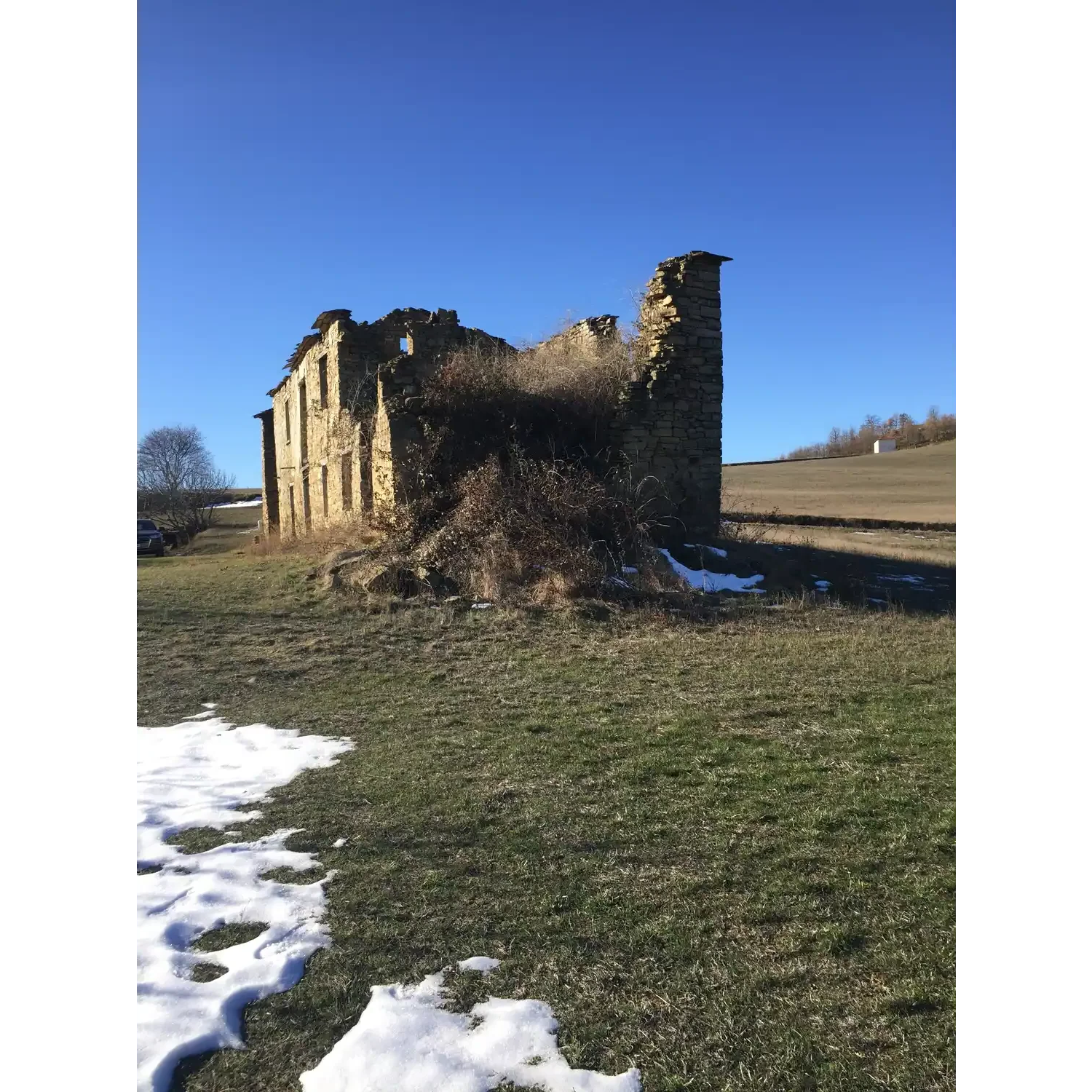
The first visit
Villa Asti began long before the house you see today.
In the winter of 2018, we first stood here with Alex and Alfonso. It was cold, quiet, and our children were still very young. In front of us was not a house, but a ruin — an old stone structure that had been left behind, slowly becoming part of the landscape around it.
There was nothing comfortable or complete about it. And yet, it was impossible not to imagine what it could become.
A simple dream
We love Italy
From the beginning, the idea was simple.
We wanted to create a place where our family could come together during the summer. A place where days would unfold slowly, where meals would stretch into the evening, and where we could share everything that makes Northern Italy so special.
We imagined long tables filled with ravioli, local wine, warm air, and the presence of the people around us. Not something extravagant, but something real. A home shaped by time, food, and the rhythm of life in the hills.
We wanted the create a space celebrating the local people and their culture.
But standing there in the wintercold of 2018, it was still only an idea. A finished villa seemed far away. . Little did we know.
The farmer
The ruin belonged to a local farmer, Roberto Salpeter, Around 90 years old.
And from the very beginning, it was clear that selling was not something he felt comfortable with. In this part of Italy, land is not just a transaction — it carries history, identity, and meaning. Selling can feel like losing something that cannot be replaced.
So the process was slow.
Alex and Alfonso made several visits, often bringing proposals directly to him. Conversations would start, pause, and start again. At times, it felt as though progress was being made. At other times, it felt as though nothing would happen at all.
More than once, we believed the project would never become reality.
Long negotiations
The negotiations stretched over a long period of time.
There was no clear timeline, no certainty, and no guarantees. Each step forward seemed fragile, and it was never entirely clear whether the farmer would eventually agree to sell.
We often asked ourselves whether it was worth continuing. Whether the idea we had imagined in that winter moment would ever move beyond that.
Still, we kept going.
The day everything stopped
Eventually, after what felt like endless discussions, we reached an agreement.
A date was set, and we travelled to Italy with the whole family to sign the contract at the notary in the village. It felt like the beginning of something important — the moment where the idea would finally become real.
But on the day of signing, everything changed.
The farmer had changed his mind, we were told. With our hearts stopped, we couldn’t believe it
Just like that, the agreement disappeared. What we thought was the start of the project suddenly felt like the end of it. We sat there, together as a family, disappointed and uncertain, not knowing whether there was any way forward.
Not the end
It would have been easy to stop there.
But Alex continued, he truly is good at this. He found a way to reopen the conversation, to rebuild trust, and to move things forward again — slowly, carefully, and without guarantees.
And then, later that autumn, we returned once more. To sign the deed..
The day it finally happened
This time, we sat down again in the notary’s office with the farmer and his daughters. We couldn’t believe it - this them we signed the deed
After years of uncertainty, conversations, and setbacks, we were now the owners of a ruin in Piemonte. It is difficult to describe that moment. It was not about what the ruin was — it was about everything it represented.
An end to a long process - and a (another long) beginning for Villa Asti, finally.
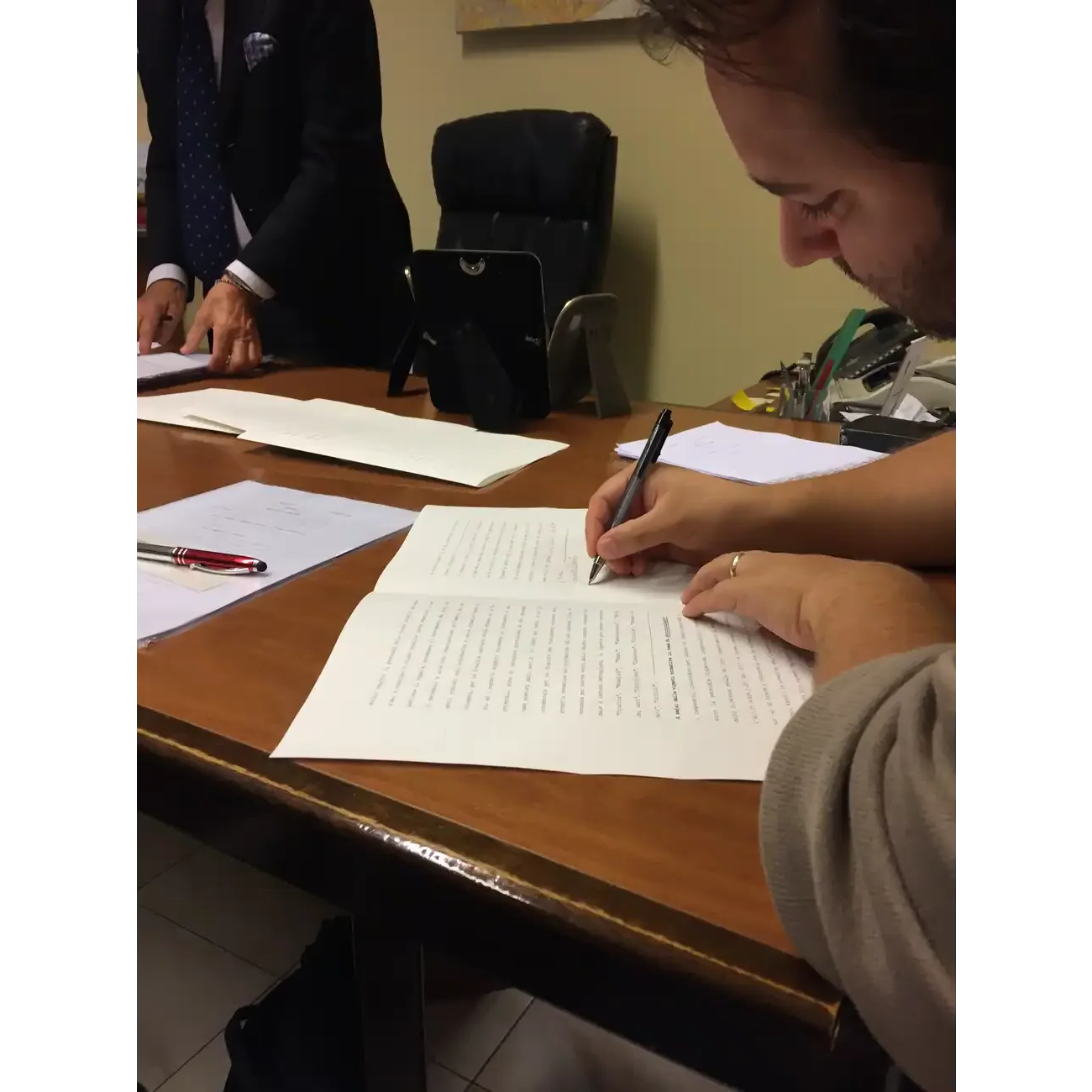
FINALLY!
On October 16.th 2018 we (Alex) signed the deed to the ruin. We couldn’t believe our luck - we felt blessed!
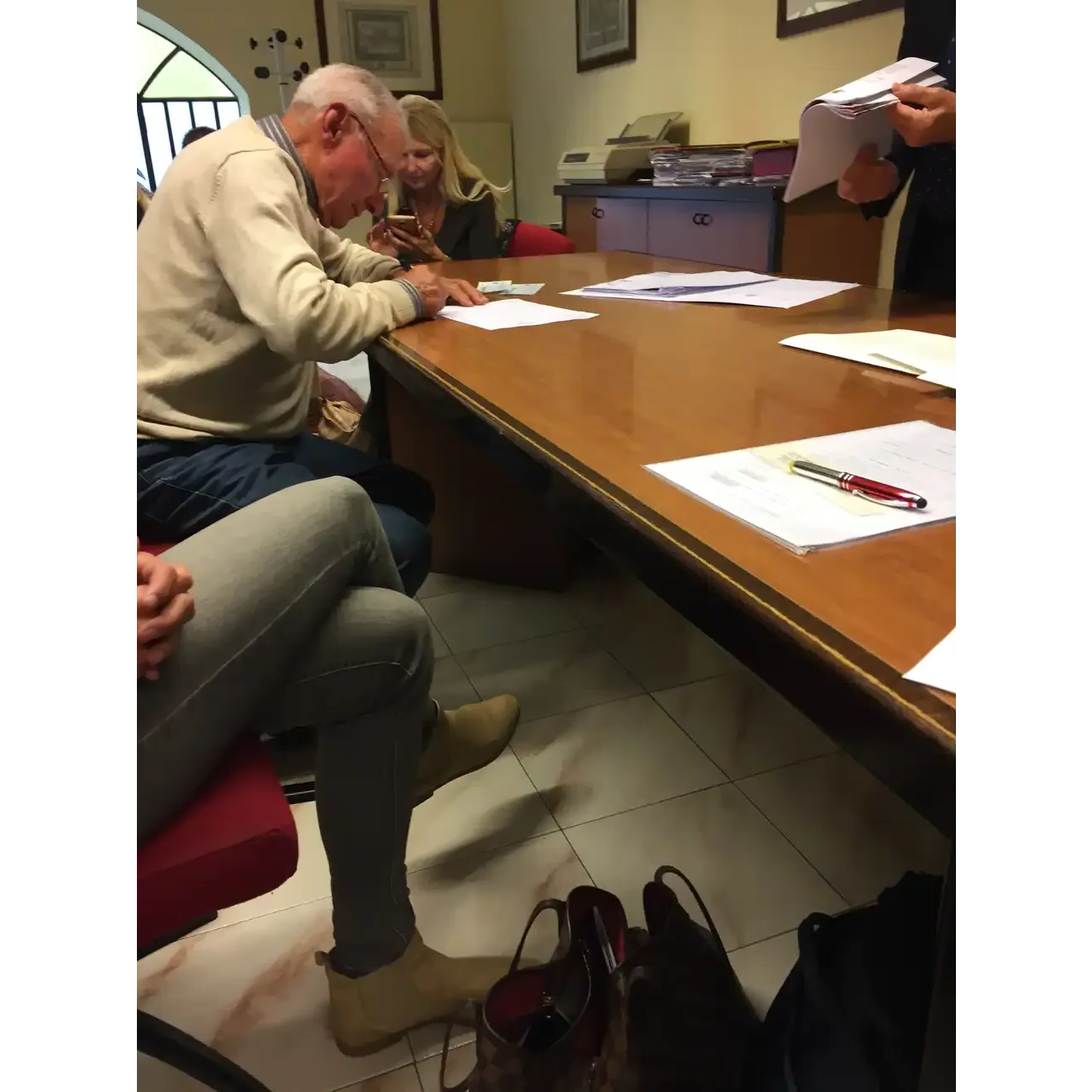
The farmer
A pause we could not control
Not long after, the world changed.
Covid arrived, and with it came restrictions that made it impossible to move forward. Travel became difficult, building could not begin, and the project was put on hold.
For a long time, nothing happened. The ruin remained as it was, and the house we had imagined existed only in our thoughts.
Building the house
In 2023, we were finally able to begin building.
What followed was not just a construction process, but a continuation of the original idea. We wanted to create something that belonged to the place — something that respected the history of the land while introducing a new way of living within it.
Local craftsmanship played a central role, combined with a more contemporary and understated design approach. Materials, proportions, and details were carefully considered, always with the intention of creating something calm, lasting, and connected to its surroundings.
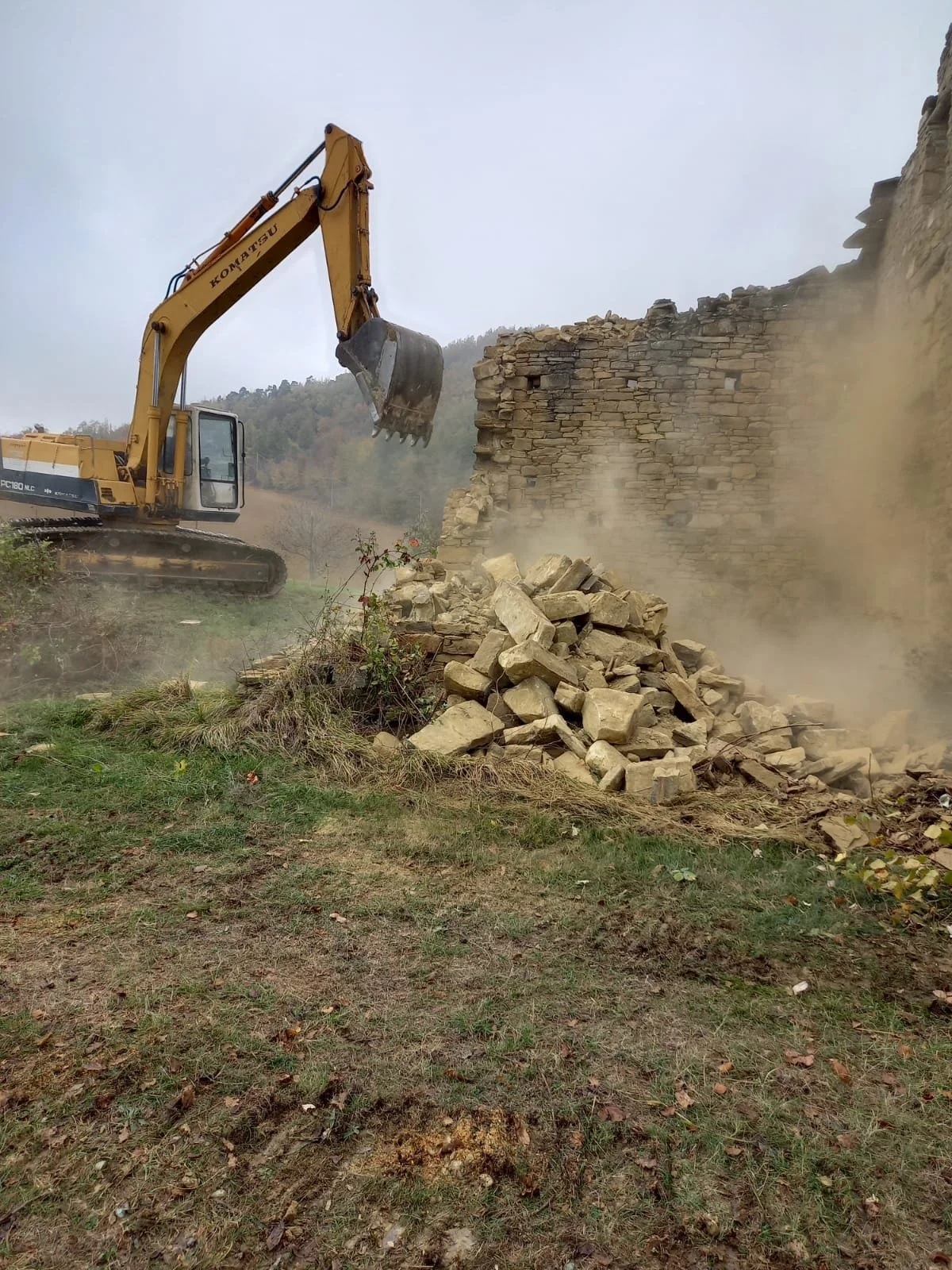
DEMOLITION
We felt sad to say goodbye to the ruin - but sure that the new house would add to the local area in a positive way.
Two and a half years later
Two and a half years later, the house stands complete. Villa Asti is no longer a ruin. It is a home.
But more importantly, it is the result of a long journey — one shaped by patience, uncertainty, people, and persistence.
What remains
Looking back, what stays with us is not just the house itself.
It is the memory of standing there in the winter of 2018, with our children, looking at something unfinished and imagining what it could become.
Villa Asti is that idea, realised over time.
And in many ways, it still carries that same feeling today.
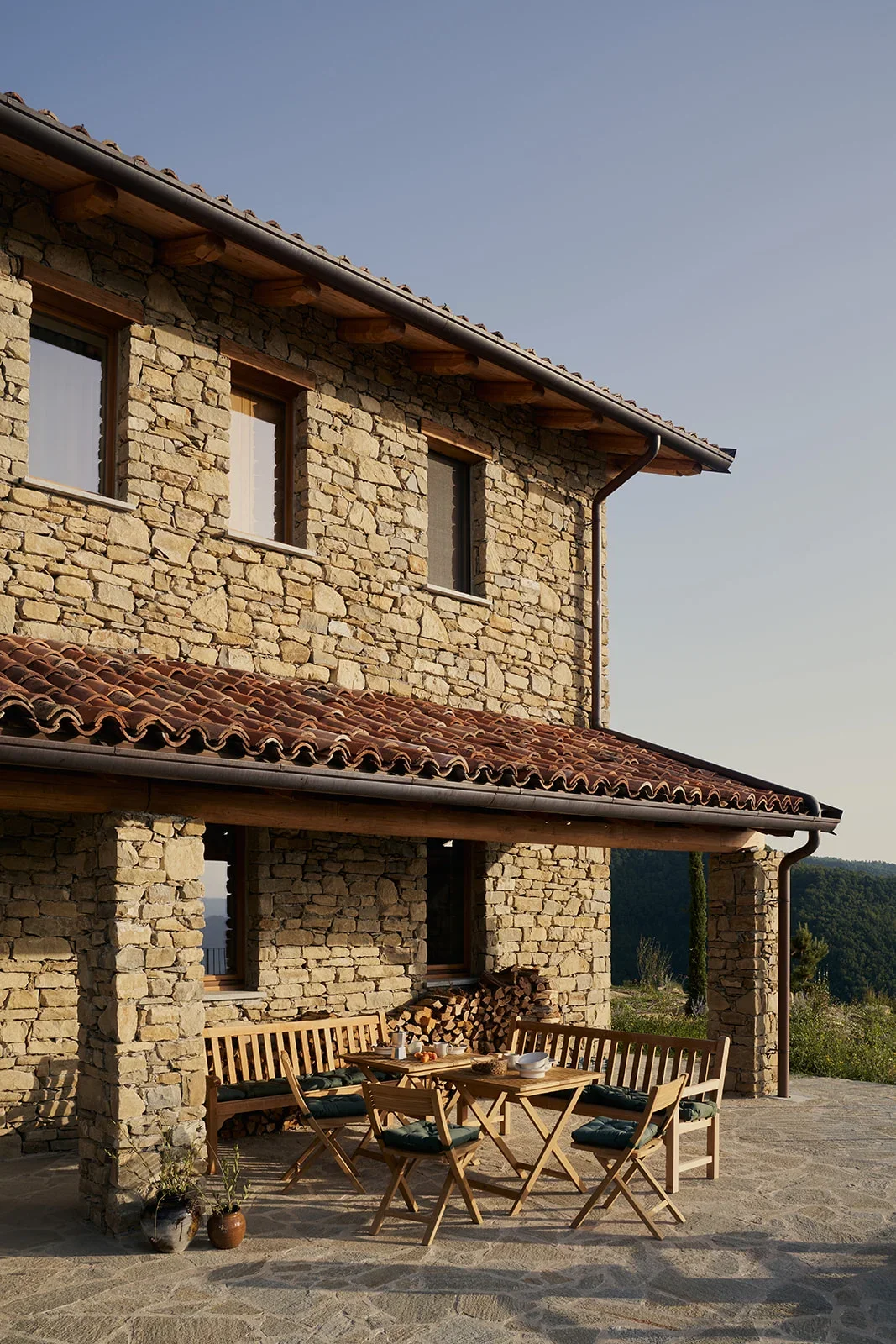
the dream : The house in 2026 - Villa Asti - Piemont